If you manage or own a commercial property in Central Florida, there’s a good chance your building either has a TPO roof already or you’ve heard it recommended. TPO has become the dominant choice for flat and low-slope commercial roofing across the region. But it’s also a system where the details matter. Poor installation, wrong application, or choosing TPO when another system is more appropriate can create headaches that outlast the savings.
This guide covers what TPO actually is, why it performs well in Florida’s climate, where it makes the most sense, and what to watch for when evaluating it as an option for your property.
What Is TPO Roofing?
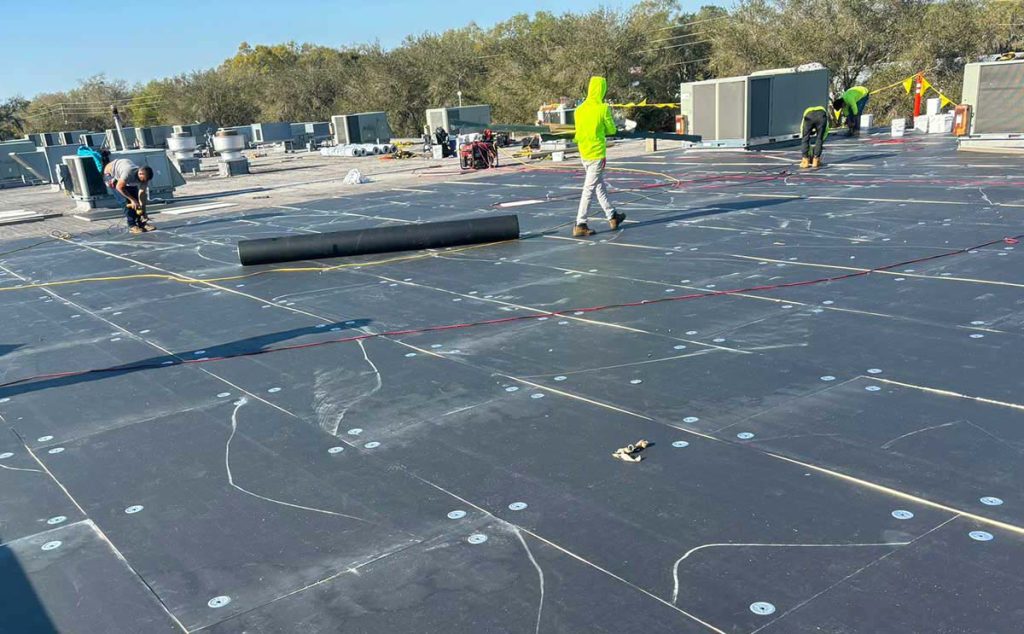
TPO stands for Thermoplastic Polyolefin. It’s a single-ply membrane (meaning a single, flexible sheet) that gets mechanically fastened or fully adhered to a commercial roof deck. The membrane is white or light-colored, which is a significant part of why it’s become so popular in warm climates.
TPO seams are heat-welded, which means overlapping sheets are fused together using hot air rather than adhesive or tape. When installed correctly, heat-welded seams are stronger than the membrane itself and create a fully waterproof barrier across the entire roof surface. That’s one of TPO’s core advantages over older flat roofing systems that relied on adhesives or torch application.
Why TPO Works Well in Florida
Florida’s climate creates a specific set of challenges for commercial roofs: intense UV exposure year-round, heavy seasonal rainfall, high humidity, ponding water on flat surfaces, and wind loads from tropical systems and afternoon thunderstorms. TPO addresses several of these directly.
Reflectivity and heat management. TPO’s white surface reflects solar radiation rather than absorbing it. This matters a great deal in Central Florida, where roof surface temperatures on dark-colored commercial roofs can exceed 160–180°F in summer. A reflective TPO membrane keeps surface temperatures substantially lower, reducing heat transfer into the building and lowering cooling demands. For retail centers, warehouses, offices, and restaurants in the Orlando metro or Tampa Bay area, that translates to meaningful energy savings during the long Florida cooling season.
Waterproofing performance. Heat-welded TPO seams perform well in heavy rainfall when installed and detailed correctly. The membrane doesn’t absorb water and resists ponding better than some older systems, provided drainage is designed appropriately for the roof.
Code compliance and energy standards. TPO’s reflectivity makes it a straightforward path to meeting Florida’s energy code requirements for commercial flat roofs, which is relevant for new construction projects and major replacements alike.
Cost vs. performance balance. Compared to PVC — another popular single-ply membrane — TPO typically comes in at a lower material cost while still delivering strong performance for most standard commercial applications. For property owners managing budget alongside performance, that trade-off often makes TPO the practical choice.
Where TPO Makes the Most Sense
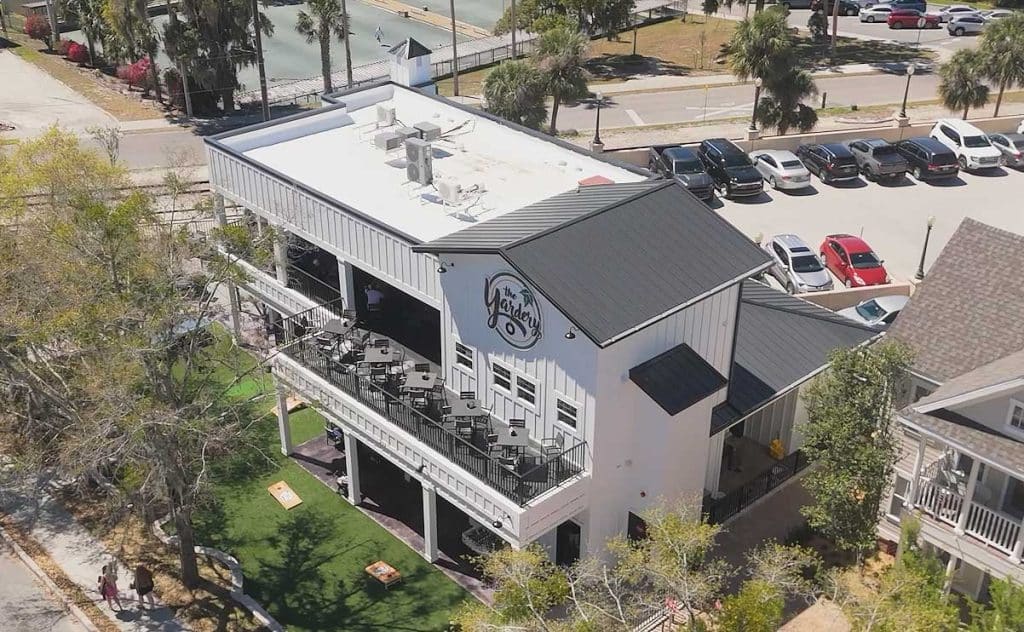
TPO is well-suited for a wide range of Central Florida commercial properties, including:
Retail centers and strip malls: Flat or low-slope roofs with large surface areas benefit from TPO’s energy efficiency and straightforward large-format installation. The reflective surface helps manage heat for tenants who run HVAC systems hard during summer months.
Warehouses and distribution facilities: Large footprints, minimal rooftop penetrations, and the need for reliable waterproofing make warehouses a natural fit for TPO. The energy savings on climate-controlled warehouses are also significant given their large roof-to-floor-area ratio.
Office buildings: Standard office properties with flat or low-slope roofs across Orange County, Hillsborough County, and Lake County commonly use TPO as a replacement system when older modified bitumen or built-up roofs reach end of life.
Multi-family properties and apartment complexes: TPO works on flat sections of multi-family buildings and is commonly used on covered walkways, breezeways, and flat-roof wings within larger residential complexes.
Restaurants: TPO handles restaurant applications well in most cases, though properties with significant grease exhaust discharge may benefit from PVC instead, which offers superior chemical resistance. Skymark can help you make the right decision for your business during a consultation.
Where TPO Has Limitations
TPO is not the right answer for every flat commercial roof, and it’s worth understanding where it falls short before committing.
Chemical exposure: TPO has moderate chemical resistance, but it’s not ideal for properties where grease, industrial solvents, or harsh chemicals regularly contact the roof surface. For applications such as food processing facilities, certain restaurants with heavy rooftop exhaust, medical or lab buildings, PVC is generally the better choice because its chemistry handles those exposures more reliably.
Installation quality is everything: TPO’s performance is highly dependent on installation quality, particularly at seams, penetrations, drains, and transitions to walls or curbs. A poorly heat-welded seam or improperly flashed drain will fail long before a well-installed one. This is one of the most important reasons to work with an experienced, certified installer.
Roof deck and substrate condition: TPO doesn’t fix a bad substrate. If your existing roof has saturated insulation, significant structural damage, or drainage problems, those issues need to be addressed before or during any new TPO installation. Laying a new membrane over a compromised deck is one of the most common sources of premature TPO failure.
Ponding water over 48 hours. Florida’s Building Code and most manufacturer warranties flag ponding water as a concern. TPO handles ponding better than some older systems, but chronic ponding indicates a drainage design problem that should be corrected.
TPO vs. Other Flat Roofing Options
Property owners evaluating flat roofing in Central Florida typically compare TPO against a few other systems. Here’s a quick picture of how they stack up:
TPO vs. PVC: Both are single-ply membranes with heat-welded seams and similar appearance. PVC costs more but offers significantly better chemical resistance, making it the right call for properties with grease or chemical exposure. For standard commercial applications without those demands, TPO typically wins on cost without meaningful performance trade-offs.
TPO vs. Modified Bitumen: Modified bitumen is a multi-layer asphalt-based system with a long track record in Florida and strong familiarity among building owners. It’s still a solid option for older buildings with simpler roof layouts and for properties where a proven, easy-to-repair system is a priority. TPO generally outperforms modified bitumen on energy efficiency and seam strength, but mod bit’s repairability and track record make it a legitimate choice in many situations.
TPO vs. Silicone Coating: Silicone coatings aren’t a replacement for TPO — they’re a restoration option applied over existing roofs when the substrate is still structurally sound. If your existing TPO or modified bitumen roof is aging but still fundamentally intact, a silicone coating can extend its life and restore waterproofing without a full tear-off. Skymark uses silicone coatings only, not acrylic, because silicone holds up better under Florida’s UV exposure and heavy rainfall. If the roof deck or insulation is compromised, a roof replacement is needed.
TPO vs. EPDM: EPDM (rubber roofing) is a black single-ply membrane that’s been used for decades on flat commercial roofs. It’s cost-effective and durable but lacks TPO’s reflectivity advantage, which makes it less favorable in Florida’s heat-intensive environment. For budget-driven projects on warehouses or storage facilities where energy performance is secondary, EPDM can still make sense.
Learn more about roof types we install
Maintenance and Longevity of TPO Roofing
A properly installed TPO roof on a Central Florida commercial building should deliver a long service life when maintained correctly. The primary maintenance tasks are straightforward: keeping drains and scuppers clear of debris, addressing any visible membrane damage promptly, and scheduling professional inspections twice a year (ideally before and after hurricane season).
Between inspections, property managers should watch for standing water that doesn’t drain within 48 hours, visible membrane separations or blistering around seams or penetrations, and signs of interior leaks such as ceiling stains or moisture in insulation.
Catching small issues early is significantly less expensive than allowing them to develop into larger membrane failures or interior damage. Skymark’s preventative maintenance program includes scheduled inspections, minor sealant touch-ups, debris removal, and priority storm response for commercial property owners who want to protect their investment proactively.
Common Questions About TPO Roofing in Central Florida
How long does a TPO roof last in Florida? A properly installed and maintained TPO roof typically lasts 20–30 years under Florida conditions, though actual service life depends on installation quality, maintenance history, and exposure factors like rooftop traffic and equipment.
Does TPO qualify for Florida energy credits or rebates? TPO’s reflective surface supports compliance with Florida’s energy code requirements for commercial buildings, and some utility providers and programs offer incentives for cool-roof installations. The specific availability of credits or rebates varies by utility district and program year, so it’s worth checking with your provider when budgeting a replacement project.
Can TPO be repaired if it’s damaged? Yes. TPO repairs are relatively straightforward — damaged sections can be patched using the same heat-welding process as the original installation. The key is addressing damage promptly before water infiltrates the insulation layer underneath.
Is TPO appropriate for flat residential roof sections? Yes. Skymark installs TPO on residential flat roof sections as well as commercial properties. Modern homes with flat or low-slope architectural elements benefit from the same energy efficiency and waterproofing performance that make TPO popular on commercial buildings.
How do I know if my existing flat roof should be replaced with TPO or coated instead? A Skymark inspection evaluates your current roof’s condition, checks for saturated insulation, and assesses structural integrity. If the roof deck and existing membrane are still sound, a silicone coating may extend service life without the disruption of a full replacement. If there’s significant moisture infiltration or structural concern, replacement is the more reliable path.
Get a Commercial Roofing Evaluation for Your Central Florida Property
Skymark Roofing installs TPO roofing systems for commercial and multi-family properties throughout Central Florida, from Orlando and Orange County to Tampa Bay, Lake County, and beyond. Our team evaluates your property honestly, explains your options clearly, and recommends the system that fits your building, your budget, and your long-term goals.